




Understand Your Natal Chart: What Life Script Were You Given?

Many astrology beginners or those who know a little about astrology often emphasize which aspects, angles, or placements they have in their natal charts, such as planets in fall or exaltation, to infer their personality and life trajectory. However, this approach is neither objective nor comprehensive. Astrology is a system where planets, signs, houses, and aspects interact holistically to form conclusions. Therefore, in this article, I will share insights about houses, a topic often overlooked.
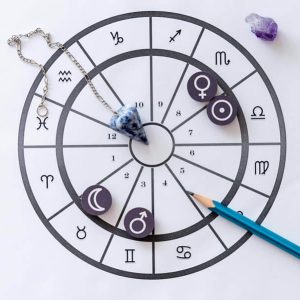
Before delving into houses, we must understand the house systems, essentially the methods used to divide the natal chart (360 degrees) into 12 segments. These divisions are artificial, as no real boundaries exist in the sky. Among the numerous house systems in use, the most common is the Placidus House System, which divides the chart unequally. Due to differences in time and location (latitude and longitude), this system can sometimes lead to "interceptions" (a topic for another day). Some astrologers prefer using the equal house system for its simplicity, evenly dividing the chart into equal parts. Beginners should familiarize themselves with the meanings of different chart segments, similar to learning about quadrants in mathematics.
• First Quadrant: Houses 1, 2, and 3 — Represent birth, learning, and early development.
• Second Quadrant: Houses 4, 5, and 6 — Involve establishing security, family awareness, and self-expression.
• Third Quadrant: Houses 7, 8, and 9 — Relate to personal growth, spiritual pursuits, one-on-one relationships, and existential themes like life and death.
• Fourth Quadrant: Houses 10, 11, and 12 — Concern societal standing, group interactions, and ultimate transcendence, including attitudes toward faith and self-surrender.
If planetary placements are concentrated in a particular quadrant, its themes and energies are amplified. For example, if most planets fall in the first quadrant, the individual is likely highly self-aware, confident, and materialistic, with strong learning and analytical abilities.
Key Chart Points:
1. Ascendant (1st House cusp): Represents the rising sign and determines the ruling planet of the chart. It shapes the overall structure of the natal chart.
2. Descendant (7th House cusp): Governs one-on-one relationships, including emotional and professional bonds, reflecting how we respond in these dynamics.
3. Midheaven (MC): Represents career, reputation, and ambition.
4. Imum Coeli (IC): Relates to home, security, and family.
Overview of the 12 Houses:
1. 1st House: Self-expression, appearance, and how we interact with the world.
2. 2nd House: Values, finances, material possessions, and indulgence tendencies.
3. 3rd House: Communication, early education, siblings, and short trips.
4. 4th House: Family, home environment, and roots.
5. 5th House: Joy, creativity, romance, speculative ventures, and procreation.
6. 6th House: Work, health, routines, and hierarchical structures.
7. 7th House: Partnerships, marriage, contracts, and legal matters.
8. 8th House: Transformation, shared resources, taboo topics, and risks.
9. 9th House: Higher education, long-distance travel, aspirations, and trade.
10. 10th House: Career, status, public recognition, and authority structures.
11. 11th House: Groups, social causes, technology, and networks.
12. 12th House: Solitude, spirituality, healthcare, large animals, and the ocean.